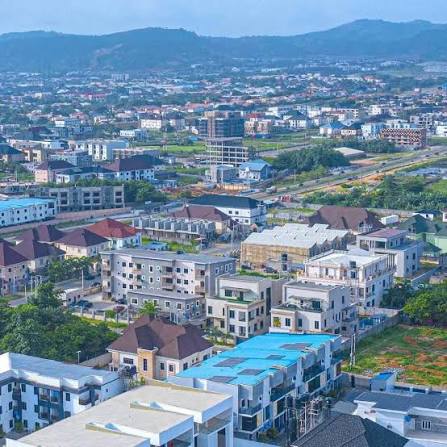
Abuja's seat of power and its most exclusive address
Price band
LGA
Distance to CBD
Distance to airport
Nearest major road
Area type
01
Overview
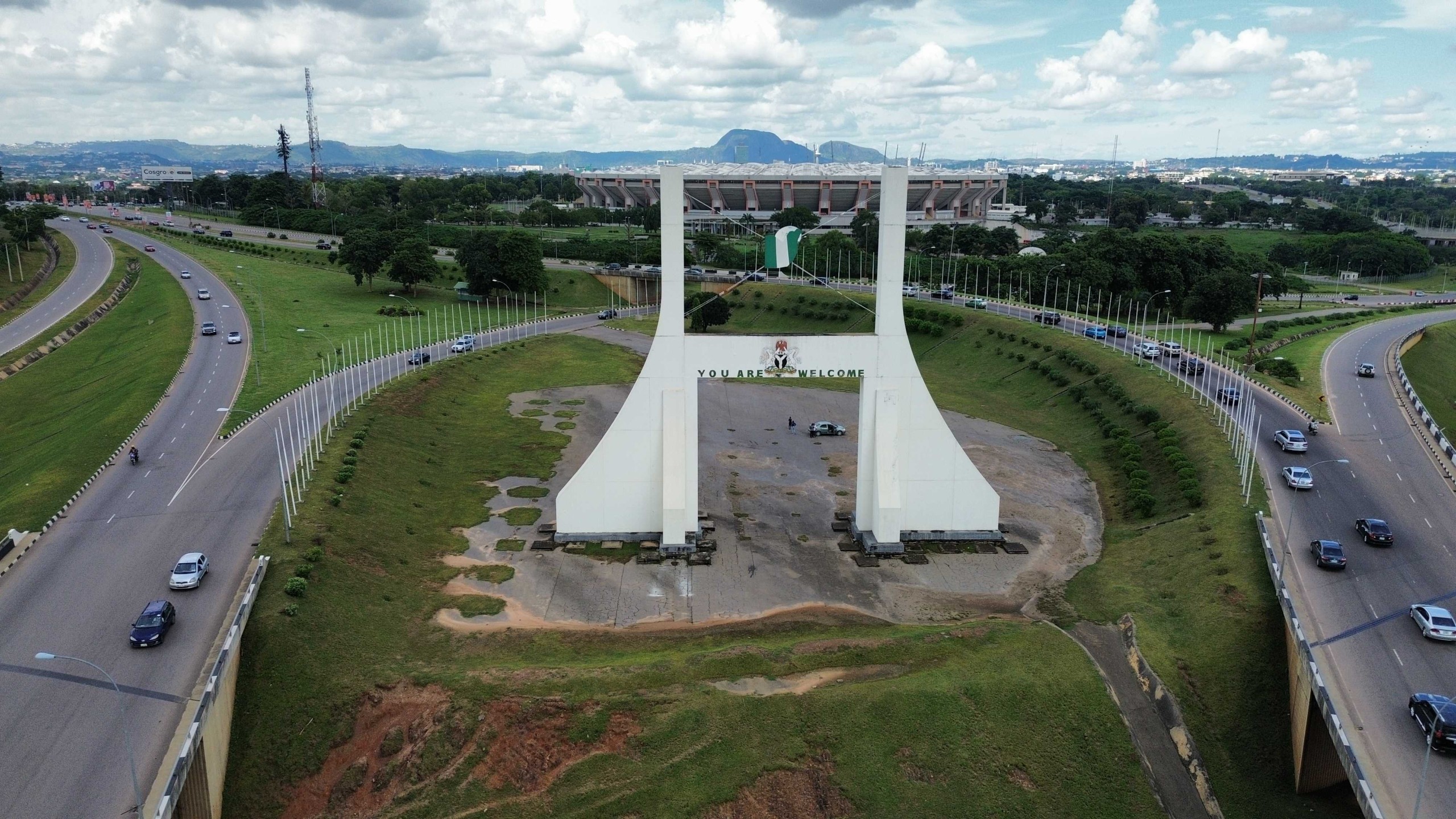
Asokoro sits at the south-eastern edge of Abuja's Phase 1, directly beneath Aso Rock, the 400-metre granite monolith that gives the capital its skyline. It is widely regarded as the most expensive district in the Federal Capital Territory, and for good reason: the Presidential Villa (Aso Villa), the ECOWAS Secretariat, the National Intelligence Agency, a World Bank office and all 36 state governors' lodges are located here.
The district was planned as a low-density zone, so plots are large, streets are wide and tree-lined, and traffic is light compared with Wuse or Garki. Around 18 embassies and consulates are based in Asokoro, which gives the neighbourhood a diplomatic, heavily secured feel. Channels Television and AIT also broadcast from the area.
People choose Asokoro for privacy, prestige and proximity. The Central Business District is typically 10 to 15 minutes away along Yakubu Gowon Crescent or Shehu Shagari Way, Maitama is a short drive north, and the Murtala Muhammed Expressway links south to Guzape, Apo and the airport road. Landmarks include the National Children's Park and Zoo, the Mediterranean Recreation Centre and the Transcorp Hilton on the Maitama boundary.
Housing is mostly detached mansions and ambassadorial residences on 1,000 to 3,000 sqm plots, with a growing number of terraces and serviced flats in gated pockets such as NAF Valley, Admiralty Estate and Sunrise Hills. Asokoro Extension, now formally known as Guzape, has absorbed much of the district's newer development.
02
History
The name Asokoro predates the capital. Oral accounts describe the Koro people arriving around 1798 from Likoro near Zaria, led by a chief called Dodonniya, followed later by Gbagyi settlers who established Kurunduma at the base of the rock. Ebira migrants reportedly called the area Aso, meaning roughly "it will be liked", and Asokoro came to mean "the Koro of Aso". The rock itself served as a natural fortress for these communities.
When Nigeria resolved in 1976 to move its capital from Lagos, the International Planning Associates master plan placed the seat of government at the foot of Aso Rock. The Three Arms Zone, housing the Presidency, National Assembly and Supreme Court, was developed immediately north-west of Asokoro through the 1980s, and Abuja was formally declared the Federal Capital City on 12 December 1991.
Asokoro was laid out as one of the original Phase 1 districts alongside Maitama, Wuse, Garki and the Central Area. Its first residents were senior officials, diplomats and the governors' lodges; private mansions followed through the 1990s and 2000s. The old village of Kurunduma still exists within the district, and the hilly extension to the south was opened up as Guzape in the 2010s.
03
Location & Neighbours
Asokoro occupies the south-eastern corner of Abuja Phase 1 within the Abuja Municipal Area Council. Aso Rock and the Three Arms Zone form its northern and north-western edge, with the Central Business District just beyond. Maitama lies to the north across the Transcorp Hilton area, Garki to the west, and Guzape (Asokoro Extension) climbs the hills to the south and south-east.
Yakubu Gowon Crescent is the district's spine, curving from the Central Area past the state lodges and embassies. Shehu Shagari Way and Ahmadu Bello Way connect to Garki and Wuse, while Murtala Muhammed Expressway runs along the southern boundary towards Apo, Gudu and the Airport Road. Nelson Mandela Street, Maitama Sule Street and Julius Nyerere Crescent carry most of the internal residential traffic.
Katampe, Jahi and Wuse 2 are all within a 15 to 20 minute drive in normal conditions.
04
Who Lives Here
Asokoro's residents are a mix of serving and retired senior public officials, ambassadors and diplomatic staff, top military officers, oil and gas and banking executives, and old-money families who bought land in the 1990s. The 36 state lodges bring a rotating population of governors' aides and official guests.
The lifestyle is discreet rather than showy. Most homes sit behind high walls on large plots, social life happens at private residences, hotel lounges and a handful of rooftop bars, and the streets are quiet after dark. Expatriates working for embassies, ECOWAS, WHO and the World Bank form a noticeable community, particularly in the serviced apartments along Yakubu Gowon Crescent.
Families are well represented in the gated estates such as NAF Valley and Sunrise Hills, where children can cycle within the compound and schools are a few minutes away. It is not a neighbourhood for nightlife or bargain hunting; it is chosen for security, space and status.
05
Real Estate
Asokoro's housing stock is dominated by large detached houses: five to eight bedroom mansions with staff quarters, guest chalets and generous gardens on plots of 1,000 to 3,000 sqm. Ambassadorial residences and governors' lodges set the tone, and many original 1990s villas are now being demolished and rebuilt as contemporary homes with basements, lifts and pools.
A second tier has emerged inside gated estates. NAF Valley Estate off EK Ojo Street offers three to five bedroom terraces and detached duplexes with strong security; Admiralty Estate, Sunrise Hills Estate, Heron Estate behind the Villa and Dantata Estate provide similar products. Serviced two and three bedroom flats, often aimed at diplomats and short-stay executives, cluster near Yakubu Gowon Crescent and Aso Drive.
Land is the scarcest commodity. Vacant residential plots rarely come to market, and when they do asking prices of ₦600M to well over ₦1B for roughly 1,000 to 1,200 sqm are normal; a 1,052 sqm plot on Justice Mohammed Lawal Uwais Street was recently listed at ₦1.2B. Houses typically ask from around ₦800M for a four bedroom detached home in an estate to ₦1.5B to ₦3B for large mansions.
Rents are the highest in Abuja. Three bedroom flats ask roughly ₦8M to ₦15M per annum and detached houses ₦25M to ₦60M or more. Yields are modest (often 3 to 5 per cent) but capital preservation is excellent because supply is fixed and demand from government and diplomatic tenants is steady. Investors increasingly look to Guzape next door for new-build opportunities at lower entry prices.
Typical asking figures, updated 2026
Type
Typical asking price
Flat Rent
₦8M – ₦15M / yr (2–3 bed)
House Rent
₦25M – ₦60M / yr
Flat Sale
₦200M – ₦450M
House Sale
₦800M – ₦3B
Land Sale
₦600M – ₦1.5B per plot (≈ 1,000–1,500 sqm)
Shortlet Nightly
₦120k – ₦350k / night
06
Popular Estates
NAF Valley Estate – a large gated community off EK Ojo Street with terraces and detached duplexes, popular with families for its military-grade security.
Sunrise Hills Estate – low-density estate with a high proportion of green space and classic architecture, close to Sunrise International Academy.
Admiralty Estate – big detached homes on generous plots; seven bedroom houses here have asked around ₦1.4B.
Heron Estate – semi-detached duplexes tucked behind Aso Villa, valued for its quiet location.
Dantata Estate and Boi Estate – smaller gated pockets offering duplexes and flats at slightly lower price points.
Yakubu Gowon Crescent and Aso Drive – the prestige addresses for stand-alone mansions, embassies and serviced apartments.
Kurunduma – the indigenous settlement within the district, where older and more affordable housing sits alongside new developments.
07
Transport
Asokoro is almost entirely car-dependent. Yakubu Gowon Crescent links the district to the Central Area in about 10 minutes, and Shehu Shagari Way and Ahmadu Bello Way carry traffic west to Garki and Wuse. The Murtala Muhammed Expressway along the southern edge provides a fast route to Apo, Gudu, Lugbe and the Airport Road; the airport is typically 35 to 45 minutes away outside rush hour.
Roads are wide and well maintained, and congestion is rare inside the district, though the junctions onto Shehu Shagari Way and the Expressway can slow at peak times. Security checkpoints near the Villa and state lodges occasionally close lanes during official movements.
Ride-hailing apps (Bolt, Uber, inDrive) operate freely, and painted green taxis are available along the main crescents. Public minibuses do not run inside Asokoro; the nearest busy bus stops are at Area 1 and Area 3 in Garki and at the AYA roundabout on the Nyanya road. The Abuja light rail does not serve the district.
08
Schools
Asokoro and its immediate surroundings have a good spread of private schools. New Capital School covers creche to secondary and is one of the longest-established options in the district. Sunrise International Academy, next to Sunrise Hills Estate, runs a Nigerian and British blended curriculum, while Laurel Montessori School caters for early years.
Other options within the district or a short drive include Funtaj International School, Divine Mercy Primary and Secondary School, FAMAKS British Schools and Africa Community School on the Guzape boundary. The Nigerian Turkish (Nile) and Regent group schools in Maitama and the Central Area are also reachable in 15 to 20 minutes.
For tertiary study, Baze University in Jabi and the University of Abuja's Gwagwalada campus are the closest, along with Nile University along the Airport Road. Parents in Asokoro also make use of Maitama's international schools, which are a straightforward commute via the Transcorp Hilton route.
09
Healthcare
Asokoro District Hospital on Yakubu Gowon Crescent is the government facility for the area and handles general medicine, maternity and emergencies. Private options include Nizamiye Hospital's Asokoro branch and Providence Multi-Specialty Hospital, both offering specialist consultations and diagnostics. Sure Health Laboratory and Diagnostics provides lab testing and imaging.
Because the Central Area and Maitama are so close, residents also rely on Cedarcrest Hospital, Nisa Premier and the National Hospital in the Central Business District, all within about 15 minutes. The State House Medical Centre serves the Villa. Pharmacies are well represented: H-Medix has a mall and pharmacy in the district, and smaller chemists operate in Asokoro Shopping Mall and the plazas along Nelson Mandela Street.
10
Leisure & Shopping
Retail in Asokoro is convenience-led rather than mall-led. Asokoro Shopping Mall, Hillside Plaza, The Haven Mall and H-Medix Mall provide supermarkets, pharmacies, boutiques and cafés, and Blinkers Supermarket is the local grocery stop. A fruit and fresh-produce market operates near the district edge, and Garki Modern Market is roughly ten minutes away for bulk shopping.
For larger shopping trips residents head to Ceddi Plaza in the Central Area, Jabi Lake Mall or Next Cash and Carry, each 15 to 25 minutes by car.
Leisure options lean towards open space. The National Children's Park and Zoo beneath Aso Rock is a weekend favourite with families, and the Mediterranean Recreation Centre offers pools, courts and event space. Gyms inside the Transcorp Hilton and the fitness suite at Brew23 Lounge are used by residents, and Retro Africa Gallery is a respected contemporary art space. The IBB Golf and Country Club in Maitama is the nearest course.
11
Dining
Asokoro's restaurant scene is small but good quality. The Pavilion Restaurant is a long-standing choice for continental and Nigerian dishes, Oriental Grills serves Chinese and Asian food, and Wells Café and Bakehouse, Brunch Lane and 99 Burgers and Café cover brunch, pastries and casual meals. Mai Shayi Coffee Roasters is the local specialty-coffee stop.
Quick-service options include Drumstix and Celebrity Fried Chicken, and the Transcorp Hilton's restaurants (including Bukka and Zuma Grill) are a few minutes away on the Maitama side. For a wider choice of fine dining, residents drive to Wuse 2 or Maitama, each about 15 minutes away.
12
Nightlife
Nightlife in Asokoro is low-key and lounge-based. Brew23 Lounge combines a bar with a tennis court and gym, Skye Bar is a rooftop lounge with views towards Aso Rock, and Glamour Lounge and Café, Eden Lounge, Vingt Quatre and the Shisha Lounge draw an after-work crowd. Ibiza Nightclub is the main late-night option, and The Tavern Liquor and Winery serves as a wine bar and bottle shop.
Most residents looking for a bigger night out head to the bars and clubs of Wuse 2 or the hotel lounges at the Transcorp Hilton. Noise is kept in check by the district's diplomatic status and security presence.
13
Places of Interest
Aso Rock dominates everything: the monolith rises about 936 metres above sea level and is visible from most of the city. Aso Villa, the Presidential complex, sits at its base alongside the Three Arms Zone. The ECOWAS Secretariat, the National Intelligence Agency headquarters and the row of state governors' lodges are all within the district.
The National Children's Park and Zoo is the main family attraction, and the Mediterranean Recreation Centre hosts events and weddings. Retro Africa Gallery showcases contemporary African art. Worship options include the ECWA and Catholic churches in the district, the National Mosque and National Christian Centre in the Central Area about ten minutes away, and numerous smaller churches and mosques in Kurunduma.
14
Security
Asokoro is among the safest districts in Abuja. The presence of the Presidential Villa, embassies and state lodges means armed police, DSS and military patrols are constant, and there are checkpoints on the approaches to the Villa. Estates such as NAF Valley and Admiralty add their own gated access and guards. Asokoro Police Division serves the district.
Residents should still expect occasional road closures during VIP movements, and the usual precautions about opportunistic theft apply on quieter streets at night. Overall, security is a primary reason people pay a premium to live here.
15
Pros & Cons
Pros
Highest security cover in the city thanks to the Villa, embassies and state lodges.
Large plots, wide tree-lined roads and very low density.
Five to fifteen minutes to the Central Business District, Maitama and Garki.
Strong, stable demand from diplomatic and government tenants.
Excellent long-term capital preservation with almost no new land supply.
Cons
The most expensive rents and sale prices in Abuja.
Limited nightlife, malls and walkable amenities within the district.
Road closures and checkpoints during official movements.
Rental yields are low relative to newer districts such as Guzape or Katampe.
16
FAQs
Is Asokoro a good place to live?
Yes, if privacy and security are the priorities. Asokoro is quiet, well policed and a short drive from the Central Area, with good private schools and hospitals nearby. It is less suited to people who want busy nightlife or affordable housing.
How much is rent in Asokoro?
Typical asking rents are ₦8M to ₦15M per annum for a two or three bedroom flat and ₦25M to ₦60M for a detached house, with fully serviced diplomatic homes going higher. Estate terraces in NAF Valley sit towards the lower end.
How much does land cost in Asokoro?
Residential plots of roughly 1,000 to 1,500 sqm typically ask ₦600M to ₦1.5B, depending on street and title. Land is extremely scarce and most plots are sold off-market.
What are the best estates in Asokoro?
NAF Valley Estate, Sunrise Hills Estate, Admiralty Estate and Heron Estate are the best known gated options. Stand-alone mansions along Yakubu Gowon Crescent and Aso Drive are the most prestigious addresses.
Is Asokoro safe?
It is one of the safest districts in Nigeria because of the concentration of the Presidency, embassies and state lodges. Expect heavy security presence and occasional checkpoints.
How far is Asokoro from the airport?
Nnamdi Azikiwe International Airport is about 40 km away, typically 35 to 45 minutes by car via the Murtala Muhammed Expressway and Airport Road outside peak hours.
What is the difference between Asokoro and Guzape?
Guzape was originally called Asokoro Extension and lies on the hills immediately south. It is newer, hillier and still developing, with lower prices and more new-build estates, while Asokoro is mature, flatter and more expensive.
Enquire about Asokoro
Speak with a CW Real Estate advisor for pricing, availability, and viewings in this neighbourhood.
Nearby guides