Nigeria's most expensive square metres, on a man-made island
Price band
LGA
Distance to CBD
Distance to airport
Nearest major road
Area type
01
Overview

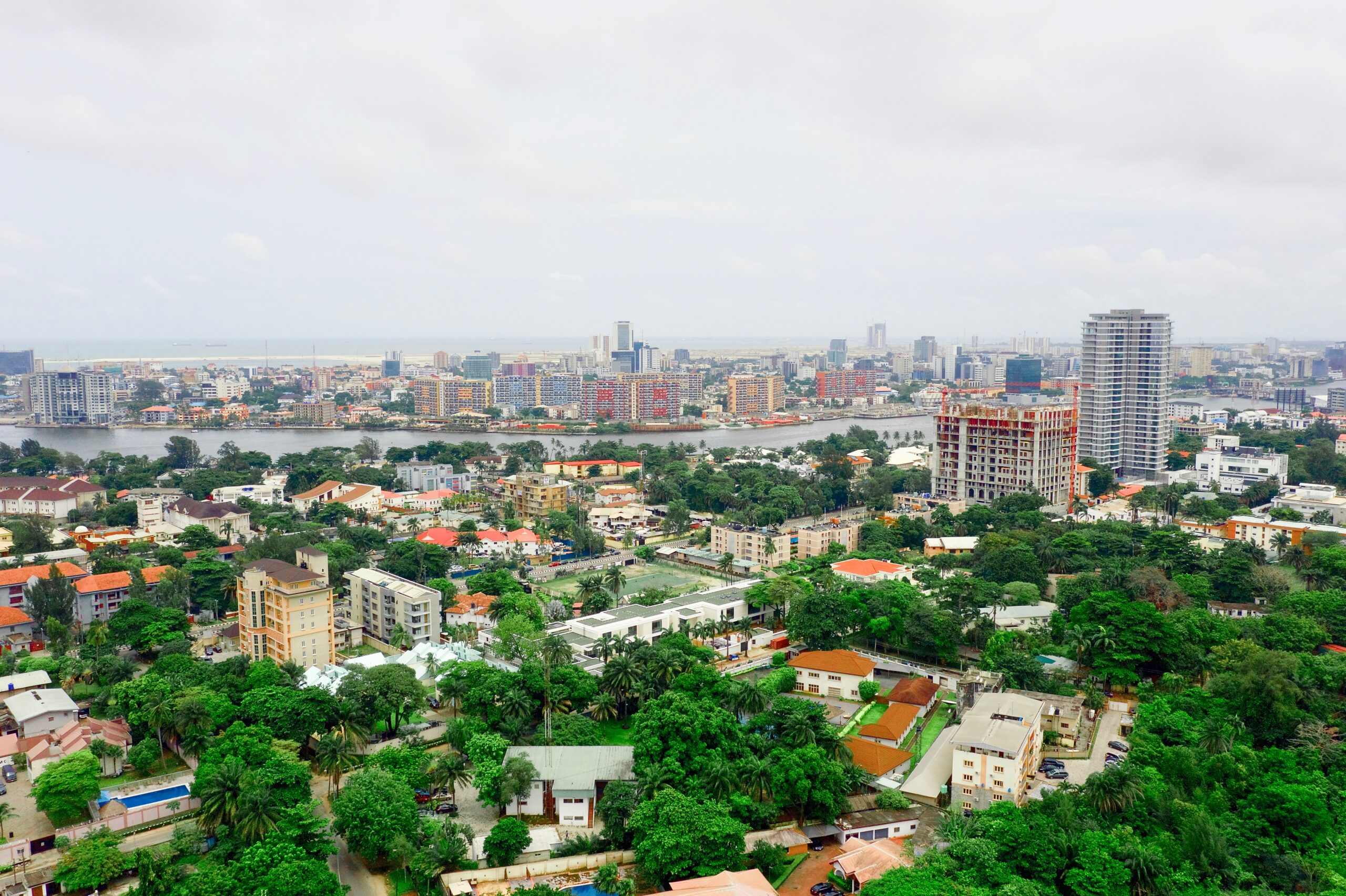
Banana Island is an artificial island in the Lagos Lagoon, attached to the north-eastern edge of Ikoyi by a single causeway, Banana Island Road. It takes its name from its gently curved outline. At about 1.63 million square metres it was master-planned from the outset with 536 plots of between 1,000 and 4,000 square metres, and it remains the only part of Lagos where power, water and telecoms all run underground and sewage goes to a central treatment plant rather than septic tanks.
That infrastructure, combined with a single guarded entrance and a waterfront on three sides, has made it the most expensive address in Nigeria. Nairametrics reported average land prices of about ₦3.05M per square metre in 2025, up from roughly ₦470,000 in 2020, and current asking prices on listing portals run higher still for waterfront plots.
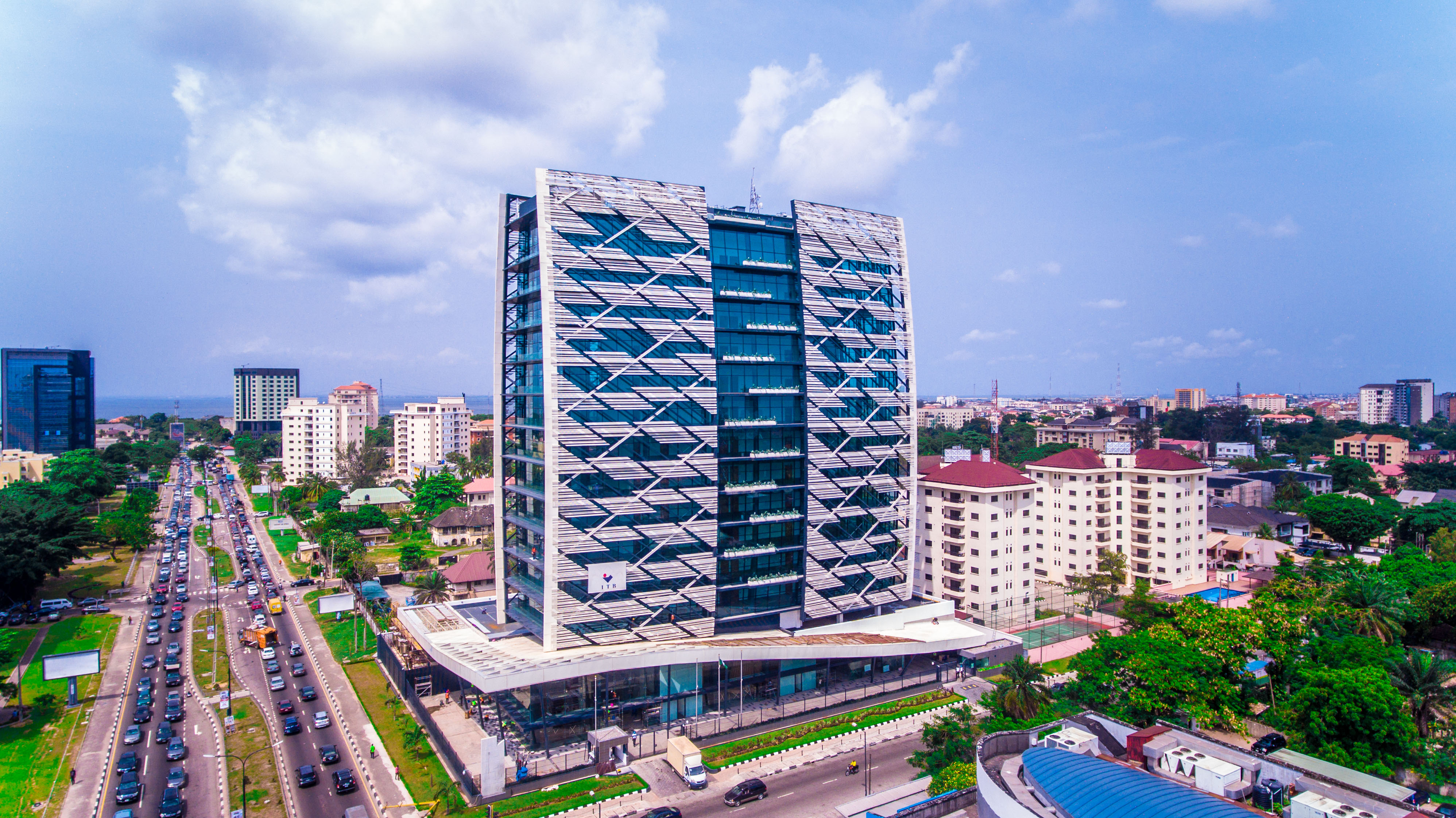
The island is now a mix of walled private mansions, mid-rise apartment blocks and a growing cluster of towers, most famously Ocean Parade Towers, a 14-block waterfront complex with tennis courts, squash courts and pools. Corporate occupiers such as 9mobile (formerly Etisalat Nigeria), Airtel Nigeria and the Ford Foundation have offices here, and Lakepoint Towers provides Grade A office space.
Residents get a quiet, car-free-feeling environment with the Banana Island Club, a sports field, a park, a British-curriculum school and a handful of supermarkets on the island itself, while Ikoyi's hospitals, restaurants and Awolowo Road shops are five minutes away. It suits buyers who want maximum privacy and are prepared to pay a premium over mainland Ikoyi for it.
02
History
The island's origins lie in a land dispute. In the late 1980s, Lagos State acquired Maroko, a settlement on the Lekki side that Chief Adebayo Adeleke's company had been developing. After roughly a decade of litigation, the government offered reclaimable lagoon foreshore off Ikoyi in compensation, and the project that became Banana Island was first marketed as Lagoon City.
The engineering and development work was carried out by the Chagoury Group, the Lebanese-Nigerian conglomerate that would later build Eko Atlantic, in partnership with the Federal Ministry of Works and Housing. Sand-filling and the installation of underground services took place through the 1990s, with the first plots sold around the turn of the millennium.
Early buyers were largely corporations and ultra-high-net-worth individuals who built detached houses on the larger waterfront plots. Ocean Parade Towers, completed in the 2000s, introduced apartment living, with units initially sold for over US$400,000. The 2010s and 2020s brought a second wave of towers, including Bella Vista, Lucrezia and Giuliano de Medici by Sujimoto, and Lakepoint Towers for offices, as owners of original plots sold or redeveloped them.
Banana Island has since become shorthand in Nigerian popular culture for wealth, with residents reported to include Aliko Dangote, Mike Adenuga and Davido.
03
Location & Neighbours
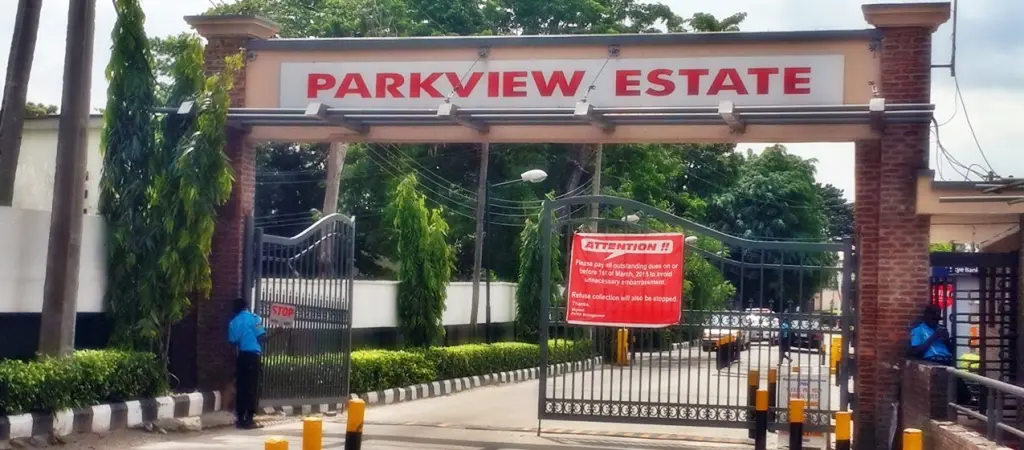
Banana Island lies in the Lagos Lagoon immediately north-east of mainland Ikoyi, with open water to its north and east. The only road access is Banana Island Road, which leaves Ikoyi near the junction of Gerrard Road and Osborne Road and crosses a short causeway to the security gate. The Mojisola Onikoyi Estate and Parkview Estate sit on the Ikoyi shore directly opposite.
From the gate it is roughly five minutes to Bourdillon Road and Alfred Rewane Road, ten minutes to Victoria Island via Falomo Bridge, and ten to fifteen minutes to Lekki Phase 1 via the Lekki–Ikoyi Link Bridge. Osborne Road and the Third Mainland Bridge approach are a few minutes north-west, which makes the island one of the better-placed Ikoyi addresses for Mainland commutes.
Neighbouring areas for comparison are Parkview, Old Ikoyi, Osborne Foreshore, Victoria Island and Eko Atlantic.
04
Who Lives Here
Banana Island's population is small and deliberately so. Residents include founders and chairmen of Nigeria's largest companies, senior oil and gas and banking executives, entertainers, foreign corporate tenants and a growing number of diaspora Nigerians who keep a serviced apartment here as their Lagos base. Several embassies and multinationals lease houses for their heads of mission.
Households in the detached houses tend to be established families with drivers, domestic staff and school-age children at Banana Island International School or the Ikoyi schools. The towers attract younger professionals and frequent travellers who value concierge services, gyms and pools more than gardens.
The community runs through the Banana Island Property Owners and Residents Association, which manages the gate, roads and common services, and social life revolves around the Banana Island Club, private entertaining and events at the sports field. It is a discreet, low-key place; residents are rarely seen outside their cars, and privacy is the shared value.
05
Real Estate
Banana Island offers three main property types. The first is the original detached house on a 1,000 to 4,000 square metre plot, often with a pool, staff quarters and, on the outer ring, direct lagoon frontage. Many were built between 2000 and 2012 and a number are now being redeveloped or refurbished. Listing portals in 2025/2026 show waterfront mansions asking between ₦4B and ₦25B, with the largest lagoon-front villas quoted in US dollars in the US$10M to US$16M range.
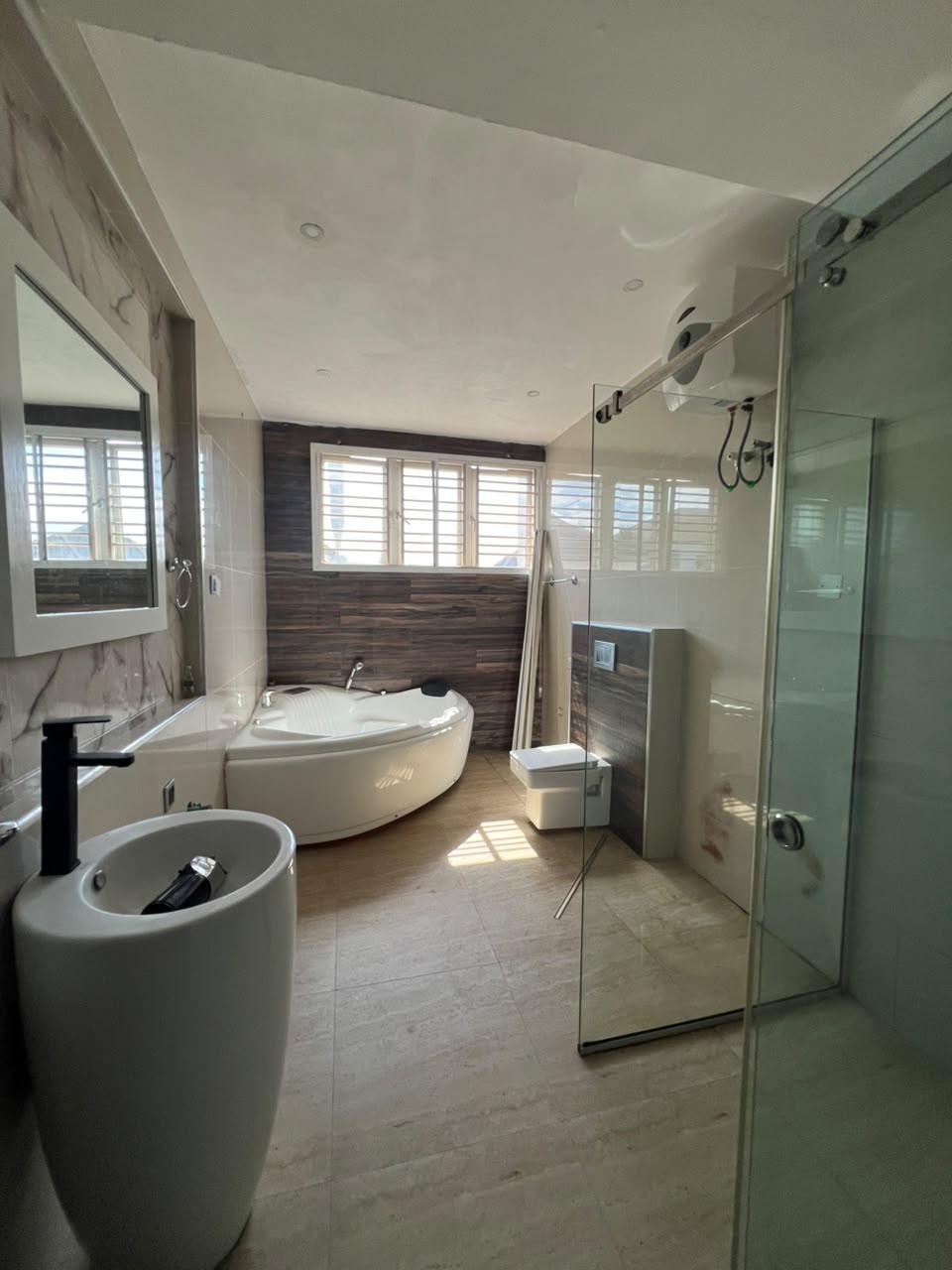
The second type is the apartment. Ocean Parade Towers set the template for three- and four-bedroom serviced flats with estate-level facilities; Bella Vista, Lucrezia, Giuliano de Medici and Echina Court followed with larger units, penthouses and, increasingly, dollar-denominated pricing. Typical asking prices for three-bedroom flats are ₦600M to ₦1.5B, with waterfront penthouses well above that. Nairametrics put the 2025 average sale price of a four-bedroom at about ₦800M and three-bedroom rents at around ₦27.5M per year.
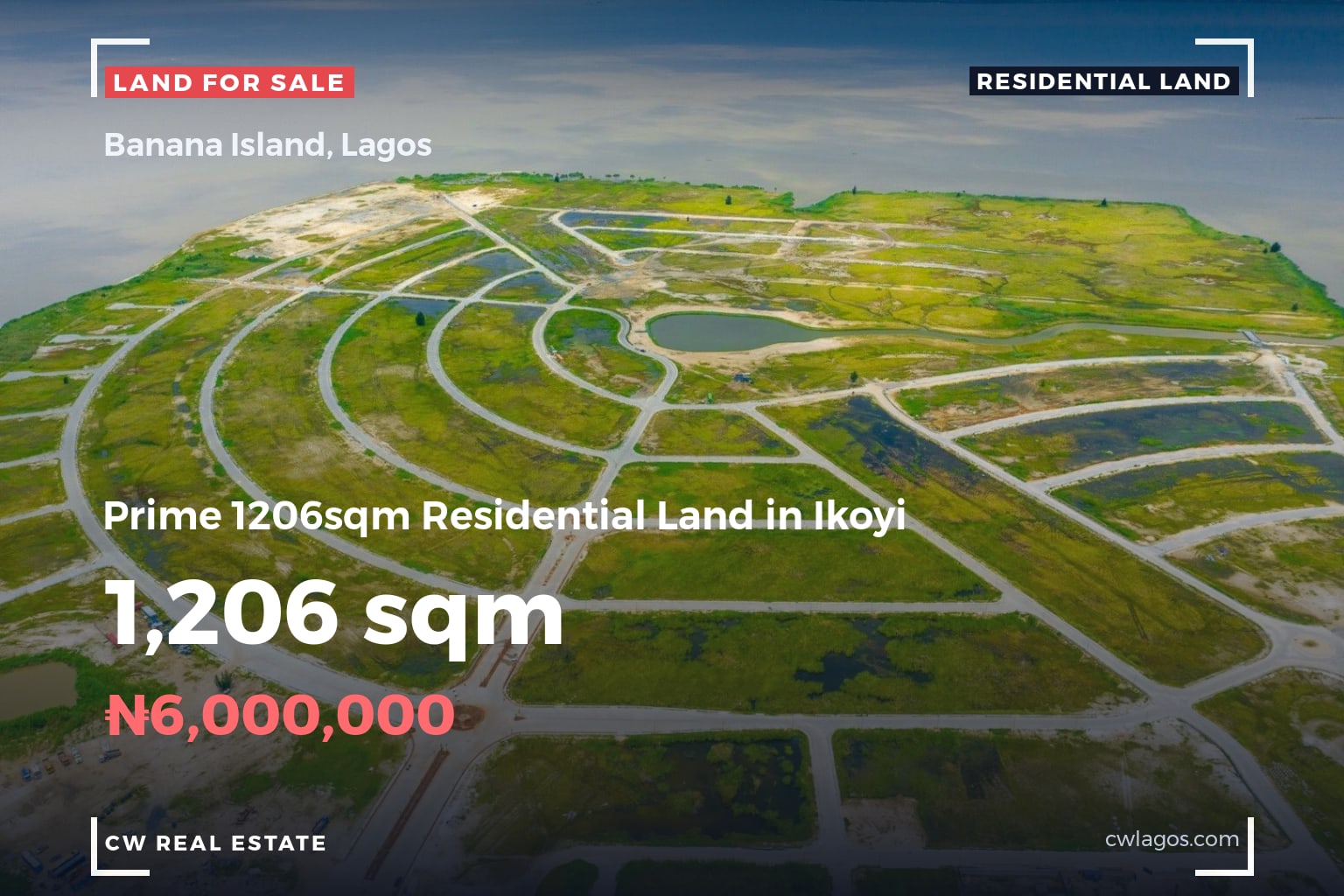
The third type is land. Because the island was fully parcelled at inception, supply is fixed and plots trade infrequently. Asking prices in 2025/2026 range from around ₦3.5M to ₦5.8M per square metre, putting a 1,000 square metre plot at ₦3.5B to ₦6B. Buyers should confirm the plot's status with the residents' association, check for any outstanding service charges and verify whether the title is a Federal C of O or a deed from the original developer.
For investors the case rests on scarcity and dollar-linked rents rather than yield: gross yields are typically low single digits in Naira, but corporate and short-let demand is deep and capital growth over the past five years has outpaced every other Lagos sub-market.
Typical asking figures, updated 2026
Type
Typical asking price
Flat Rent
₦25M – ₦75M / yr
House Rent
₦60M – ₦150M / yr
Flat Sale
₦600M – ₦2.5B
House Sale
₦4B – ₦25B
Land Sale
₦3.5M – ₦5.8M per sqm (≈ ₦3.5B – ₦6B per 1,000 sqm plot)
Shortlet Nightly
₦250k – ₦600k / night











06
Popular Estates
Ocean Parade Towers: the island's landmark, 14 apartment blocks on the waterfront with tennis, squash, pools and 24-hour management.
Bella Vista Towers: apartments and penthouses with lagoon views, popular with corporate tenants.
Lucrezia by Sujimoto: a 14-storey tower of large-format flats marketed as the island's premium new-build.
Giuliano de Medici by Sujimoto: luxury terraces and penthouses from the same developer.
Echina Court: two- to four-bedroom apartments at a slightly more accessible entry point.
Grace Court, Morgan Apartments and The Address Homes: smaller mid-rise blocks scattered across the island.
Lakepoint Towers: Grade A offices, the island's principal commercial building.
Waterfront avenues: the outer ring of plots with direct lagoon frontage carries the highest values; inner plots along the island's spine trade at a discount.
07
Transport
Banana Island is reached only by Banana Island Road, a causeway from mainland Ikoyi with a manned gate where visitors are logged. Inside, the roads are wide, well lit and lightly trafficked, with pavements that actually get used by joggers and dog-walkers in the early morning.
Because the island sits at the north-eastern corner of Ikoyi, it is closer to Osborne Road and the Third Mainland Bridge than most of the district, which helps Mainland and airport journeys: allow 35 to 50 minutes to Ikeja off-peak. Victoria Island via Bourdillon Road and Falomo Bridge is ten to fifteen minutes, and Lekki Phase 1 via the Link Bridge about the same.
The single access point is both the island's security strength and its weakness. A breakdown or event at the gate can cause queues, and at the morning peak the junction with Gerrard and Osborne roads backs up. There is no public bus service onto the island; staff and visitors typically take ride-hailing cars or walk from the gate. Several residents keep boats at private jetties, and the Lagos State waterways authority licenses boat operators from nearby Ikoyi jetties.
08
Schools
On the island itself, Banana Island International School offers a British curriculum from 15 months to around age 13, which is the main reason many younger families settle here. Le Poshe School in Parkview Estate and Heritage House School in Ikoyi are the closest alternatives for nursery and primary, both within a five-minute drive of the gate.
For the established Ikoyi primaries, Lagos Preparatory School, Corona School Ikoyi and Greenwood House School are ten minutes away. Secondary options nearby include Holy Child College, Bridge House College and St Gregory's College, while the American International School of Lagos and the British International School on Victoria Island draw most expatriate and internationally minded families. Lagoon School, a girls' secondary school in Lekki, and Greensprings School are within the wider catchment across the Link Bridge.
Pan-Atlantic University's Lagos Business School is the nearest notable tertiary institution, with the University of Lagos across Third Mainland Bridge.
09
Healthcare
There is no full hospital on the island, but Ikoyi's facilities are minutes away. Iwosan Lagoon Hospitals in Ikoyi provides multi-specialty and emergency care, Gold Cross Hospital on Bourdillon Road is the nearest general hospital, and First Cardiology Consultants handles cardiac cases. Hanoba Medical Centre and Atlantic Medical Centre cover GP and diagnostic needs.
Across Falomo Bridge, Reddington Hospital and Paelon Memorial Hospital on Victoria Island are within fifteen minutes. Pharmacies on the island are limited to supermarket counters, so residents rely on HealthPlus and MedPlus outlets on Awolowo Road and in Ikoyi Mall. Most households use HMO plans with air-ambulance cover, and house calls from private doctors are common.
10
Leisure & Shopping
Day-to-day shopping on the island is served by a handful of supermarkets, including Hartleys, Oladimeji Shonubi Supermarket and a small shopping complex near the entrance. For anything larger, residents go to SPAR and Ikoyi Mall on Awolowo Road, Falomo Shopping Centre or the Palms in Lekki.
Recreation is where Banana Island stands out. The Banana Island Club is a members' facility with pools, tennis courts and dining. The Banana Island Sports Field hosts football, concerts and community events, and Banana Island Park has children's play areas and lagoon views. The waterfront promenade is used for running and cycling in the cool of the morning. Ocean Parade and the newer towers each have private gyms, pools and squash courts for residents.
Across the causeway, the Ikoyi Club 1938 and Lagos Polo Club are the traditional clubs, the Ikoyi Golf Club is the nearest course, and Scuba Lagos and the Lagos Jet Ski Riders operate from the Osborne and Five Cowrie Creek waterfronts. YouFine Art Arena on the island and Omenka Gallery in Ikoyi cater to art collectors.
11
Dining
Dining on the island itself is limited by design: the Banana Island Club restaurant, a few cafés and the Hanging Basket Restaurant cover casual needs, and Chicken Republic has an outlet near the gate. Residents entertain at home, and private chefs and catering are a significant local industry.
Ikoyi's best tables are five to ten minutes away: Nok by Alara for contemporary African cuisine, The Wheatbaker for hotel dining and Sunday brunch, Da Vinci for Italian, The Yellow Gate for Nigerian classics and Casa Lydia for Lebanese. Café Neo is the nearest specialist coffee house. Victoria Island, with Sky Restaurant and Lounge, RSVP, Shiro and the Eko Hotel restaurants, is a fifteen-minute drive for a bigger choice.
12
Nightlife
Banana Island is deliberately quiet at night. There are no clubs or bars open to the public, the gate logs every visitor and noise rules are enforced by the residents' association. Entertaining happens in private homes, at the Banana Island Club or at events on the sports field.
When residents want a night out they head to Awolowo Road in Ikoyi for lounges such as Cocoon, Soul Lounge and Club 57, or across Falomo Bridge to Victoria Island for Quilox, Escape and the Blowfish Hotel's club, all within fifteen minutes.
13
Places of Interest
The island is itself a point of interest: tour operators and photographers regularly stop at the causeway for the skyline view of Ocean Parade Towers and the lagoon. Lakepoint Towers marks the commercial end of the island, and the mansions on the outer waterfront avenues are frequently featured in Nigerian media.
Worship centres are on the Ikoyi side: Ikoyi Baptist Church, the Ikoyi Community Mosque on Awolowo Road, the Syrian Mosque and the Redeemed Christian Church of God's Ikoyi parishes are all within ten minutes. The Ikoyi Club 1938, the Lekki–Ikoyi Link Bridge and, a little further, the National Museum at Onikan are the closest heritage sites.
14
Security
Security is the island's defining feature. A single guarded causeway, visitor logging, perimeter water on three sides and estate-funded patrols mean reported crime is very rare. Individual towers add their own gatehouses, CCTV and concierge staff, and many private houses retain armed police or civil defence guards.
The practical risks are operational rather than criminal: service charge disputes, power supply to estate common areas, and congestion at the single gate. As with all reclaimed land around the lagoon, buyers should satisfy themselves about drainage and the condition of shoreline protection on waterfront plots.
15
Pros & Cons
Pros
Underground power, water and telecoms plus central sewage, unique in Lagos
Single-entry gated island with the lowest crime profile in the city
Large plots and waterfront frontage that cannot be replicated elsewhere
Close to Third Mainland Bridge for Mainland and airport runs
Strongest capital appreciation of any Lagos sub-market over the past five years
Cons
The highest entry prices in Nigeria, often quoted in US dollars
Very limited shops, restaurants and nightlife on the island itself
One access road creates queues at peak times and during events
High service charges for estate and tower management
Low Naira rental yields; returns depend on capital growth
16
FAQs
Where is Banana Island?
Banana Island is a man-made island in the Lagos Lagoon off the north-eastern shore of Ikoyi, in Eti-Osa Local Government Area. It is reached by a single causeway, Banana Island Road, near the junction of Gerrard Road and Osborne Road.
How much is land in Banana Island?
Typical asking prices in 2025/2026 are ₦3.5M to ₦5.8M per square metre, so a standard 1,000 square metre plot is in the ₦3.5B to ₦6B range. Waterfront plots command the highest figures.
How much is rent in Banana Island?
Three-bedroom flats typically ask ₦25M to ₦75M per year and detached houses ₦60M to ₦150M. Many leases, especially in the towers, are priced in US dollars.
Who owns Banana Island?
The island was developed by the Chagoury Group in partnership with the Federal Ministry of Works and Housing, after land was offered to Chief Adebayo Adeleke's company in settlement of the Maroko dispute. Individual plots are now privately owned and the estate is managed by a residents' association.
Is Banana Island safe?
Yes. A single guarded entrance, water on three sides and estate-level patrols make it one of the most secure residential areas in Africa.
Are there schools on Banana Island?
Banana Island International School offers a British curriculum for children from 15 months to around 13 years. Older children typically attend schools in Ikoyi or on Victoria Island.
Can anyone visit Banana Island?
Visitors are admitted through the gate but are logged and usually need a resident or business host. There are no public attractions or open bars on the island.
Is Banana Island a good investment?
For long-term capital preservation it has the strongest record in Nigeria, with land values rising more than five-fold since 2020. Rental yields are low in Naira terms, and the market is illiquid, so it suits patient, well-capitalised buyers.
Enquire about Banana Island
Speak with a CW Real Estate advisor for pricing, availability, and viewings in this neighbourhood.